> For the complete documentation index, see [llms.txt](https://help.orbe.app/llms.txt). Markdown versions of documentation pages are available by appending `.md` to page URLs; this page is available as [Markdown](https://help.orbe.app/geolocation-popup/getting-started/customize/content.md).
# Content
Control every piece of text and information your customers see, from the popup title to the country, language, and currency they’re shown.
This section lets you tailor the message, behavior, and logic of the popup to ensure it feels relevant, helpful, and aligned with your brand’s voice.
## **Close button**
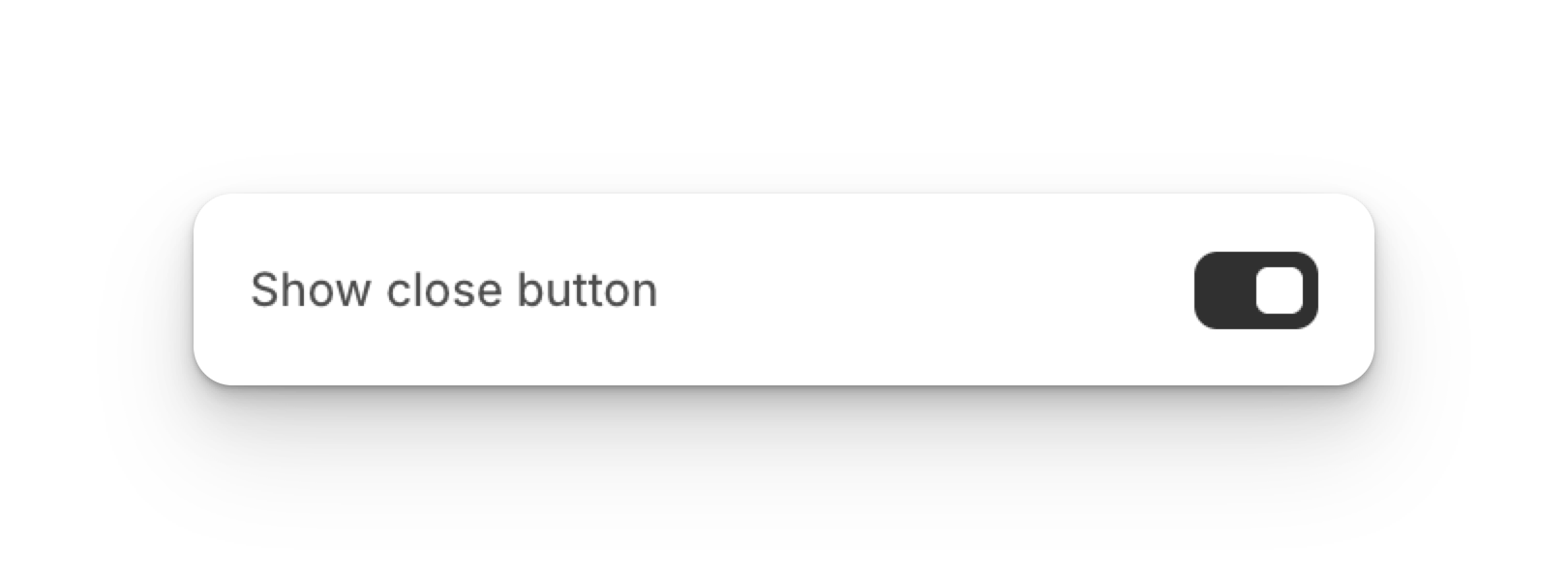
Enabling this option allows customers to manually close the geolocation popup. If they do, they’ll stay in the shopping experience they initially landed in, and **no redirection** will occur.
If the popup is closed without selecting a country or market, Orbe will **save that decision for 7 days**, so the popup won’t show again during that time.
{% hint style="info" %}
To ensure customers are always guided to the correct version of your store, we recommend keeping this option disabled. With the close button turned off, users will continue by clicking “Shop now”, and Orbe will automatically preselect their country based on IP.
{% endhint %}
{% hint style="info" %}
**Accessibility tip**: while you can customize many aspects of the modal, we strongly recommend not hiding the 'Shop now' button. Doing so would trigger an automatic redirection as soon as the country is selected, resulting in an unannounced context change for users relying on screen readers (WCAG 2.2 – 3.2.2 On Input, Level A).
{% endhint %}
## **Recommended country flag**
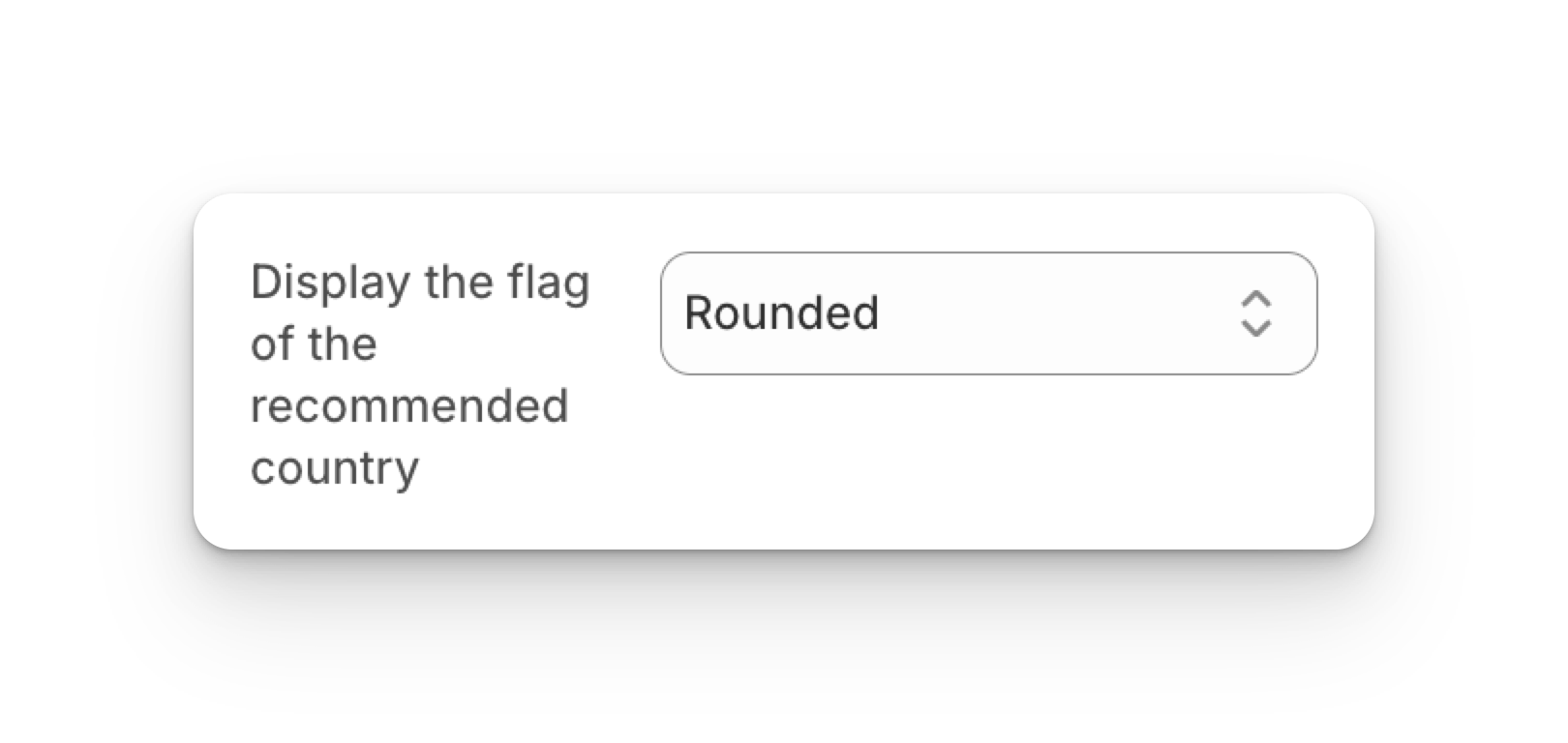
Enable this option to show the **flag of the customer’s current location** in the popup, a small detail that adds a more localized and familiar touch.
For example, a visitor from Spain will see the Spanish flag displayed next to the country name.
You can choose the shape that best fits your design: rounded, square, or circular.
## **Market currency**
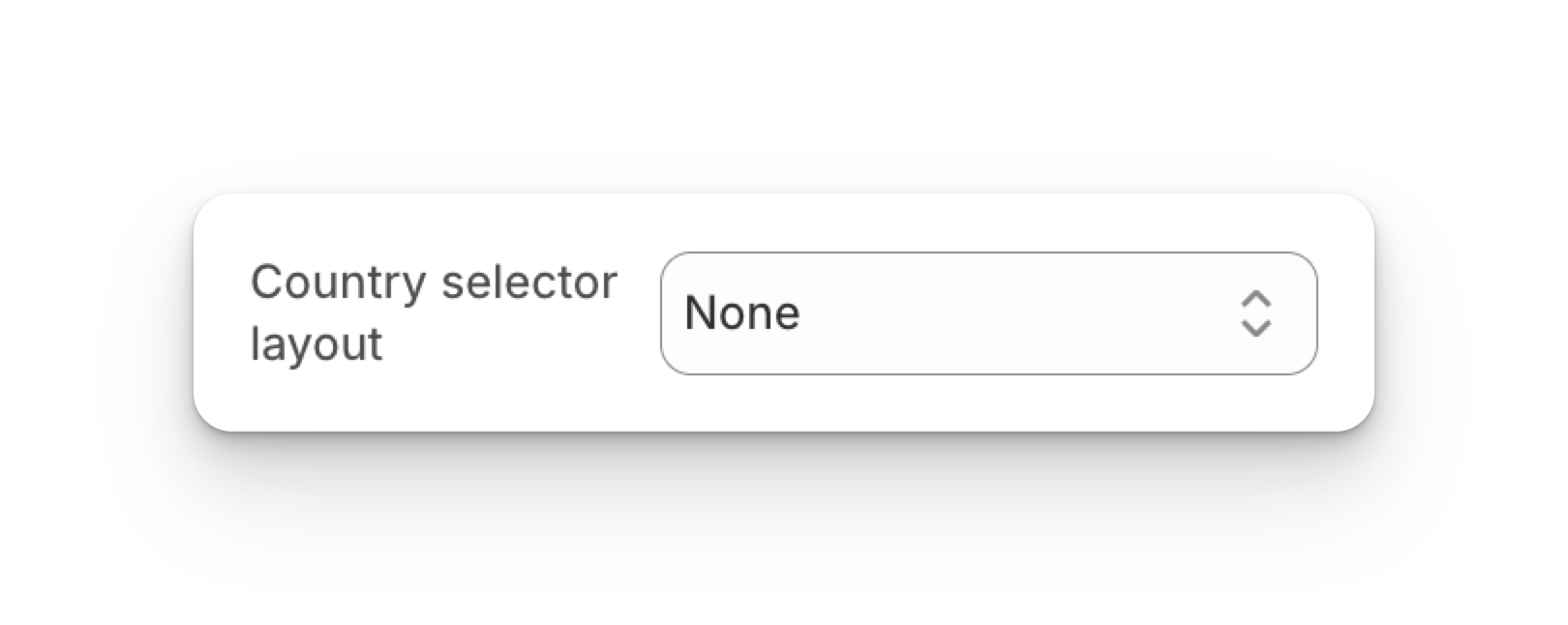
This setting controls how currency details appear in the **country selector**. By default, only the country name is shown, but you can choose to include currency information to make things clearer for your customers.
You can display:
* the **`{currency_code}`** (e.g. United States (USD))
* the **`{currency_symbol}`** (e.g. United States ($))
* or **both** (e.g. United States (USD $))
You can also combine this with the **country flag** for a more informative and localized display.
## **Languages**
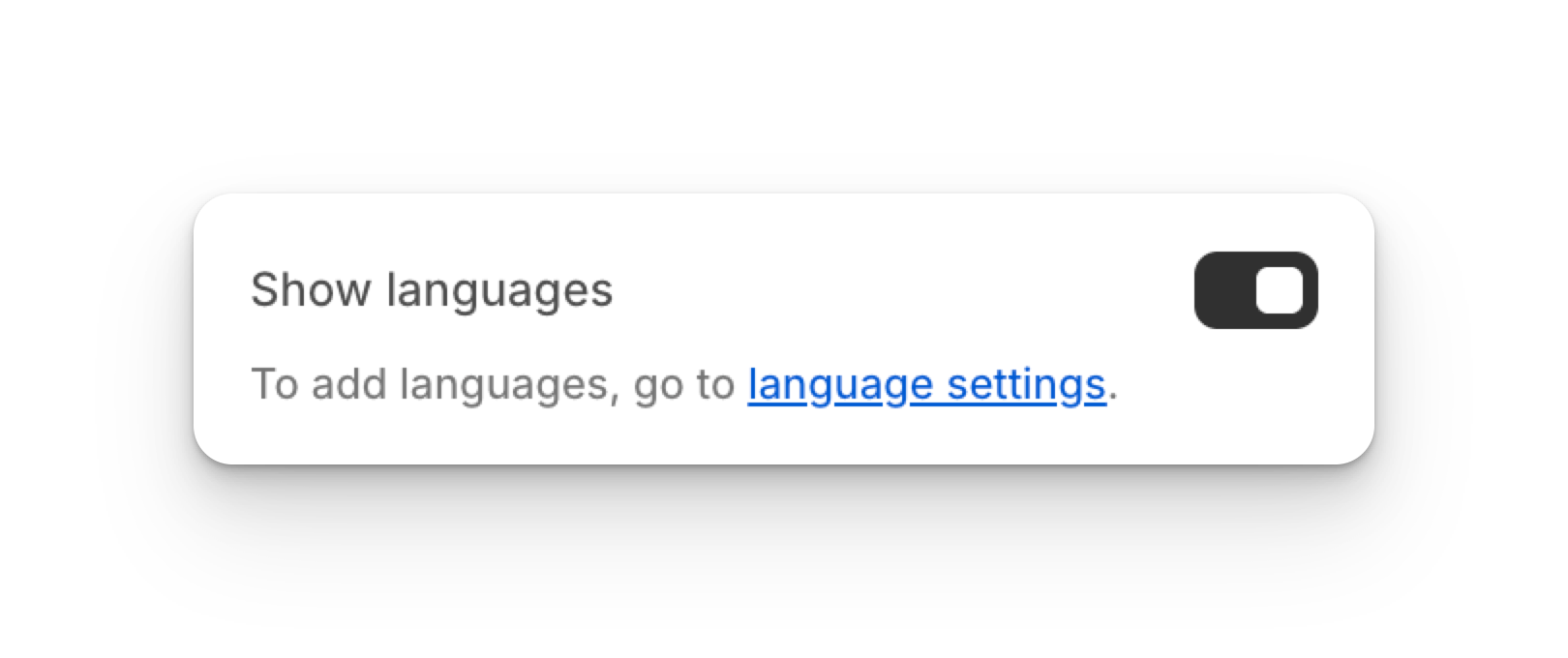
If your store supports **multiple languages**, we recommend enabling the **language selector**. This allows customers to easily switch to their preferred language directly from the popup, improving clarity and reducing friction.
*Want to make the most of this feature? Check out our Language Selector tutorial for best practices.*
## **Country search**
Make it easier for users to find their country by letting them **search as they type**. This is especially helpful if you sell in **many markets**. It saves time and improves the overall experience.
## **Title, text, helper text, and button text**
You can fully customize the **title**, **body text**, **helper text**, and **button label** shown in the popup. This gives you the flexibility to reflect your brand’s tone of voice or communicate any important details before customers are redirected to the correct shopping experience.
{% hint style="info" %}
Learn [how to translate popup content](https://help.orbe.app/geolocation-popup/translations) into different languages based on the user’s browser settings.
{% endhint %}
{% hint style="info" %}
**Accessibility tip**: we advise against removing the title text, since it serves as the announcement of the popup for screen readers used by people with visual impairments. You may, however, customize its appearance with custom CSS to better align with your branding while maintaining accessibility. (WCAG 2.2 - 1.3.1 Info and Relationships (Level A), 2.4.6 Headings and Labels (Level AA), 4.1.2 Name, Role, Value, (Level A)).
{% endhint %}
## **Fallback text**
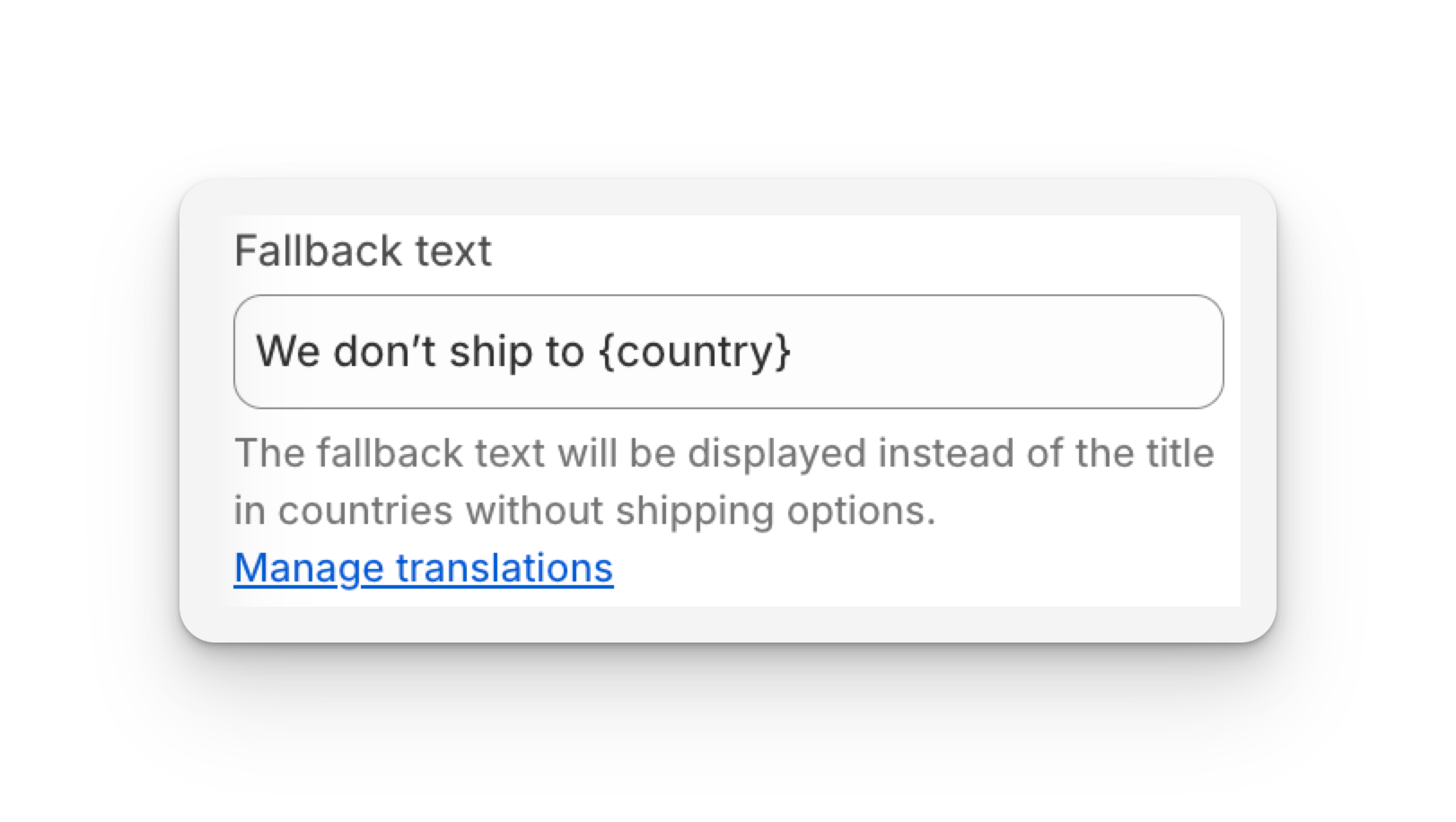
This text will appear **in place of the popup title** for customers located in countries where your store doesn’t offer shipping. It’s a simple way to set clear expectations and avoid confusion when no shopping experience is available for a given region.
You can utilize the dynamic variables provided to personalize the message for each country:
* **`{country}`***: displays the customer's country. Example: Spain*
* **`{currency_code}`**: *displays the country's currency code. Example: EUR*
* **`{currency_symbol}`**: *displays the country's currency symbol. Example: €*
For instance, if your customer is in Spain and you want the title to read "We ship to Spain", you can achieve that using this variable.
{% hint style="info" %}
Learn [how to translate popup content](https://help.orbe.app/geolocation-popup/translations#fallback-translation-for-unsupported-countries) into different languages based on the user’s browser settings.
{% endhint %}
## **Background image**
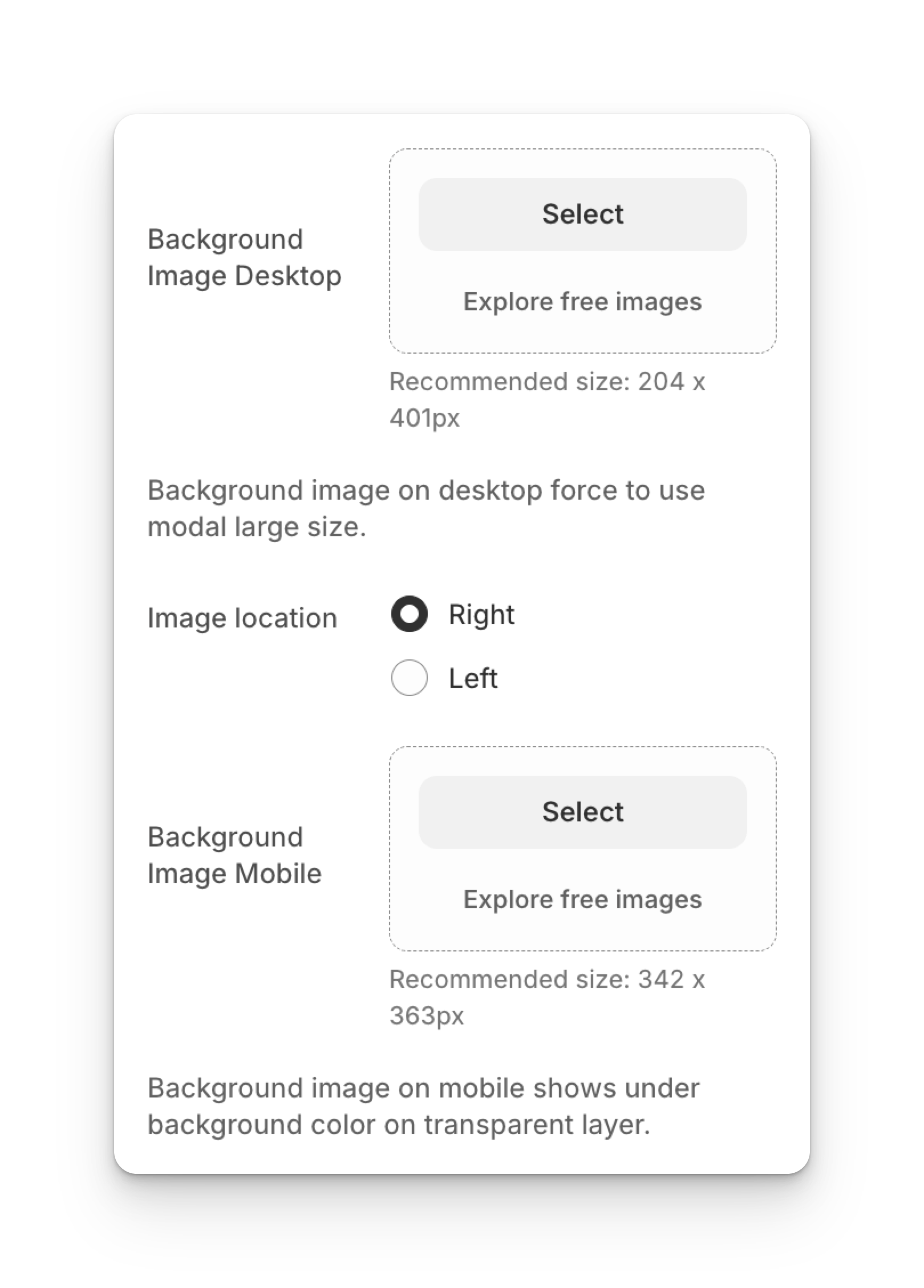
You can add a custom image to your popup to make it more visually engaging. Choose whether the image appears on the left or right side, depending on your layout preferences.
To keep the design clean, we recommend keeping the helper text under 200 characters when using an image.
Recommended sizes:
* desktop: 408 × 680 px
* mobile: 342 × 363 px
---
# Agent Instructions
This documentation is published with GitBook. GitBook is the documentation platform designed so that both humans and AI agents can read, navigate, and reason over technical content effectively. Learn more at gitbook.com.
## Querying This Documentation
If you need additional information that is not directly available in this page, you can query the documentation by asking a question.
Perform an HTTP GET request on the following URL with the `ask` and `goal` query parameters:
```
GET https://help.orbe.app/geolocation-popup/getting-started/customize/content.md?ask=&goal=
```
`ask` is the immediate question: it should be specific, self-contained, and written in natural language.
`goal` is what the user is ultimately trying to achieve, the reason they need the answer. Sharing it helps GitBook give you a better, more relevant answer. A goal is most helpful when it describes the outcome the user wants rather than restating the question. For example, with `ask=how do I create an API token`, a goal like `automate deployments from our CI pipeline` lets GitBook tailor the answer to that use case.
The response will contain a direct answer to the question and relevant excerpts and sources from the documentation.
Use this mechanism when the answer is not explicitly present in the current page, you need clarification or additional context, or you want to retrieve related documentation sections.